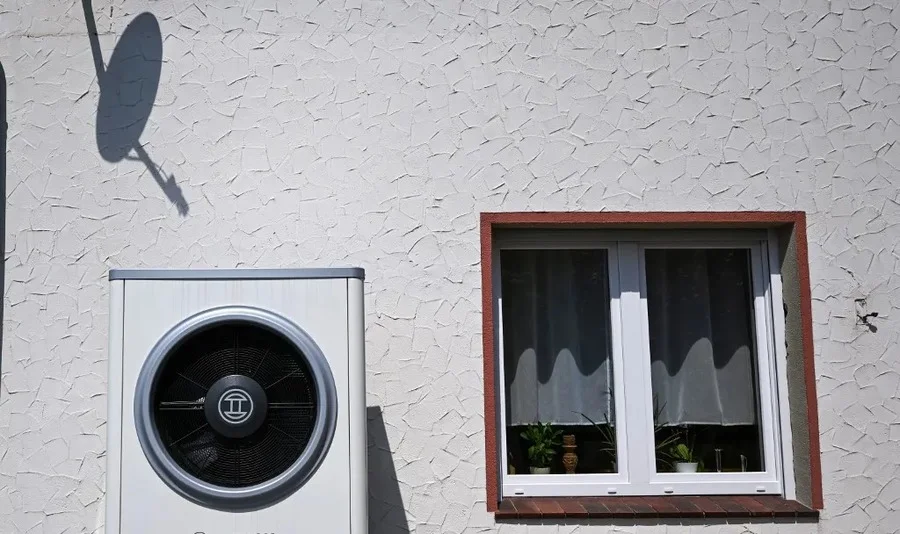
France is making a concerted push to expand heat pump installation across the country. President Emmanuel Macron has outlined ambitious plans. He aims for one million heat pumps by 2027, alongside training 30,000 qualified installers.
These systems, known as pompes à chaleur, offer an energy-efficient alternative to traditional boilers and air conditioning units. They function by transferring heat. In warmer months, heat moves from inside to outside, cooling interiors. Conversely, in winter, heat transfers into the home, providing warmth.
This heat transfer mechanism makes them highly efficient. They simply move existing heat rather than generating it. As a result, heat pumps maintain comfortable indoor temperatures with minimal energy use.
Property owners have a range of heat pump types to choose from. The ideal model depends on factors like budget, location, and the size and kind of property. Since 2014, an estimated 180,000 heat pumps have been installed annually across France.
Environmental benefits represent a major advantage. Heat pumps consume significantly less energy than conventional systems. They are a much greener option compared to air conditioning. Moreover, their low energy usage translates into substantial long-term savings for households.
These devices draw energy from natural sources. They actually produce more energy than they consume. High-end models can generate five or six times the energy they use. Consequently, homeowners can reduce heating bills by 60% to 70%, also avoiding energy-intensive air conditioning during summer.
Installation costs for a heat pump can range from €10,000 to €16,000. Prices vary based on the heat pump type and property specifications. However, as with many emerging technologies, efficiency is improving, and costs are gradually decreasing.
The French government offers significant financial incentives. Grants of up to €9,000 are available, depending on household income. Nevertheless, new standards apply since September 1st, 2026. Aid is now contingent on the chosen model meeting European certification for quality and being manufactured within the European Economic Area (EEA).
Furthermore, installing a combined solar system now requires full decarbonization of heating and/or hot water. This means no fossil fuel-based equipment should be installed or retained. Several existing schemes facilitate access to this aid, including MaPrimeRenov, Habiter Mieux, the CEE bonus, and the Eco PTZ low-rate environmental loan.
In a move to further boost affordability, the government quintupled the bonus coefficient for energy saving certificates (CEE) in September 2025. Energy providers pay a bonus based on projected energy savings. Eligibility for these certificates extends to property owners or tenants residing in a French property for two years or more.
A convenient online simulator, Mes Droits en Ligne, helps individuals determine their eligibility and the scale of available assistance. It also offers advice on solar panels, insulation, and other heating solutions. However, aid for second-home owners remains limited, though MaPrimeRenov does offer some support.
Several regulations govern heat pump installation. A certified (RGE) installer will manage the necessary prior declaration of works with local authorities. This ensures compliance with local planning rules. Property owners in communal residences must also secure approval from their property syndic.
Heat pumps generate some noise. Installers must incorporate systems to absorb vibrating noise from the outdoor unit. Ideally, this unit sits on an independent concrete base with anti-vibration mounts. If a concrete base is unfeasible, a metal chair-support system on a load-bearing wall is an option.
Geothermal pump installations require additional approval. This comes from the Direction Régionale de l’Environnement, de l’Aménagement et du Logement (DRÉAL). Installers usually assist with this process. Tenants, typically, need explicit landlord approval for such major property alterations.
Refrigerant handling is also regulated. Companies undertaking installations must hold a “refrigerant” capacity certificate if their work involves filling or intervening on the refrigeration circuit. This certificate is not mandatory if the heat pump contains less than 2kg of pre-charged refrigerant.
Finally, a July 2020 law mandates regular maintenance checks. Most heat pumps require a check every two years. Units containing over 2kg of HFC or HCFC refrigerant fluid need annual servicing.